Abu Simbel Sun Festival 2026–2027: Dates, Timing and How to Go
By Islam Hussein · September 29, 2026
By Islam Hussein, Egyptologist guide and founder of Sawa Tours · working in Egyptian tourism since 1993 · Last updated: September 2026
Quick answer: The Abu Simbel Sun Festival happens twice a year, on 22 February and 22 October. The next one is Thursday 22 October 2026, then Monday 22 February 2027. At about 6:00 AM the rising sun shines some 60 metres into the Great Temple and lights three of the four statues in the sanctuary for roughly twenty minutes. To see it, you need to be at the temple before dawn: either sleep in Abu Simbel town, or leave Aswan around 1:00 AM by road.
Dates: 22 February and 22 October every year. Next: Thursday 22 October 2026 and Monday 22 February 2027
Time: Sunrise, about 6:00 AM; the light holds on the statues for roughly 20 minutes
Where: Great Temple of Ramesses II, Abu Simbel, about 280 km south of Aswan near the Sudan border; part of the Nubian Monuments from Abu Simbel to Philae, a UNESCO World Heritage Site
What lights up: Amun-Ra, Ra-Horakhty and the deified Ramesses II. Ptah stays in shadow
Ticket: About EGP 1,200 per foreign adult on festival days, against about EGP 750 on normal days (as of September 2026)
Getting there: 3.5–4 hours by road from Aswan, or about 45 minutes by air. For the alignment you must arrive before about 5:00 AM
Best option: Sleep in Abu Simbel town the night before; otherwise a road departure from Aswan around 1:00 AM
Crowds: Thousands of people; the sanctuary queue forms hours before sunrise
Also on the day: Music and folk dance in the forecourt; Aswan's governor ordered preparations for the 2026 programme on 23 September
Good for: Travellers who care about the moment more than comfort, and don't mind a night without sleep
Not ideal for: Anyone who dislikes crowds, queues or 1:00 AM starts. A normal-day visit is calmer and still spectacular
Join it on Sawa: Aswan to Abu Simbel: Temples of Ramesses II and Nefertari
What happens inside the temple
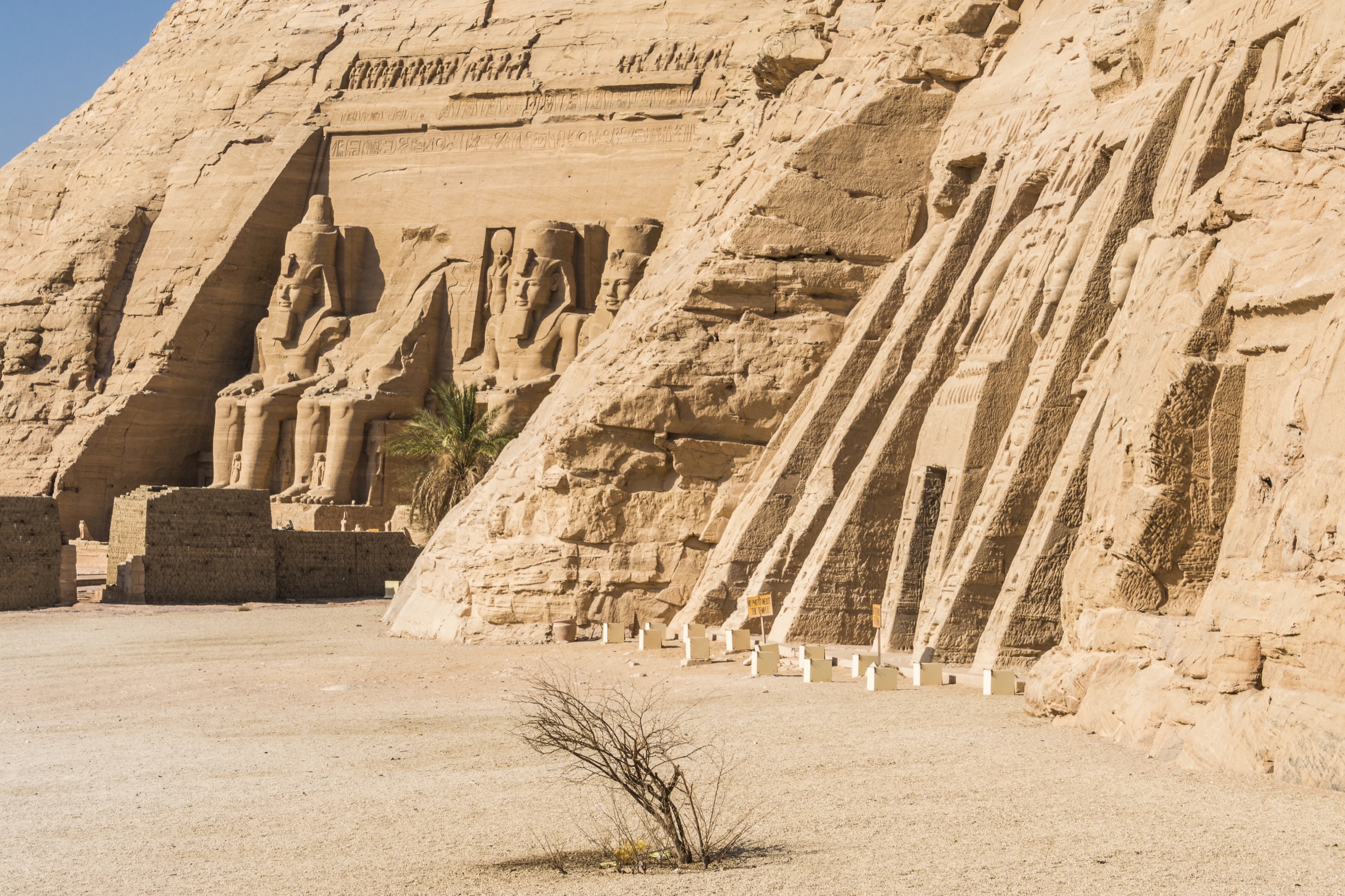
The Great Temple is cut straight into the cliff, so it runs like a tunnel: from the doorway between the four colossal seated statues of Ramesses II, through a great hall lined with eight pillar statues of the king as Osiris, through a second hall and a vestibule, to a small sanctuary about 60 metres from the entrance. On most mornings, sunlight reaches only part of the way. On the festival mornings, the sun rises in line with the axis of the temple, and the beam travels the whole length of it.
At the end of that corridor sit four gods on a bench, cut from the living rock:
Ptah, the creator god of Memphis
Amun-Ra, king of the gods, from Thebes
Ramesses II, shown as a god among gods
Ra-Horakhty, the rising sun, from Heliopolis
The beam lights Amun-Ra, Ramesses II and Ra-Horakhty, and stops short of Ptah, on the far left. You'll often read that Ptah is "the god of darkness"; he isn't. Ptah was the creator and craftsman god of Memphis, closely linked with the underworld and the earth, which is the most likely reason his statue was placed where the light never quite reaches. Either way, three gods of the great cities of Egypt and the king himself sat together here, and the sun chose three of them.
The light holds for about twenty minutes, sliding slowly across the statues as the sun climbs, then withdraws. Inside, it's hot, crowded and dim, and you'll see it for a minute or two at most before the guards move the queue on. Outside, the sun rising over Lake Nasser onto the four colossi of the façade is almost as striking, and much easier to see.
Why 22 February and 22 October?
The honest answer is geometry. The temple's axis points to the spot on the horizon where the sun rises about two months either side of the winter solstice, so it lines up twice a year: once on the way south in October, once on the way back in February.
The story you'll hear from most guides is that the two dates mark Ramesses II's coronation (22 February) and his birthday (22 October). It's a lovely idea, but no ancient text names either date, so treat it as a modern tradition rather than history. What the builders clearly did intend is the alignment itself: a temple to the sun, with the sun invited in.
The move that nearly ended it
In the 1960s, the Aswan High Dam was about to drown Abu Simbel under Lake Nasser. Between 1964 and 1968, an international rescue led by UNESCO cut both temples into more than 1,000 blocks, most weighing about 20–30 tonnes, and rebuilt them about 65 metres higher and some 200 metres back from the river, inside an artificial hill. The temples were reinaugurated on 22 September 1968.
The engineers kept the orientation, so the festival survived. You'll often read that the move shifted the alignment by exactly one day, from the 21st to the 22nd. No firm record supports that precise figure, and the slow wobble of the Earth's axis over 3,000 years shifts sunrise too. In practice, the light reaches the sanctuary on the 22nd, and a partial effect can be seen a day either side, which is why some travellers plan to be there on the 21st as well.
22 October 2026: what to expect this year
The October 2026 festival falls on a Thursday. Aswan's governor ordered preparations on 23 September, including the cultural programme of music and folk dance that runs in the temple forecourt around sunrise.
Tickets: expect about EGP 1,200 per foreign adult on the day, against about EGP 750 normally. Buy by card at the site, or in advance on the Ministry's official ticket site.
Rooms: Abu Simbel town has only a handful of hotels and Nubian guesthouses, and they fill weeks ahead of the festival. If you want to sleep there, book now.
Flights: extra flights are sometimes added for the festival, but most scheduled flights land after sunrise. Check the arrival time before you book one for the alignment.
Weather: cool and clear before dawn, around 30 °C by late morning. Bring a layer for the wait.
If 22 October doesn't fit, the next alignment is Monday 22 February 2027. February is cooler and slightly less crowded, and this page will be updated for it straight after the October festival.
How to get there in time
Abu Simbel is about 280 km south of Aswan, and the light arrives at about 6:00 AM, so the whole plan comes down to one question: how do you get there before 5:00 AM? There are three ways.
Sleep in Abu Simbel town
Leave: About 4:00 AM, a few minutes' drive
Pros: Best spot in the queue, some sleep, calm visit after the crowds leave
Cons: Few rooms, booked out early; one more night on your trip
Road from Aswan
Leave: About 1:00 AM from your hotel
Pros: Cheapest and most common; no extra night
Cons: No sleep; 3.5–4 hours each way on a desert road
Flight from Aswan
Leave: Depends on schedule
Pros: About 45 minutes in the air
Cons: Most flights land after sunrise; check before booking
A normal Abu Simbel day trip, leaving Aswan around 4:00 AM, arrives after the alignment. On festival days, make sure your transport is timed for the sunrise, not for a normal visit.
The morning, hour by hour (road from Aswan)
1:00 AM: hotel pickup in Aswan
4:30 AM: arrive at Abu Simbel; tickets (card only) and security
5:00 AM: choose your spot. Join the queue for the sanctuary, or stand in the forecourt facing the lake
About 6:00 AM: sunrise. The light reaches the sanctuary and holds for about twenty minutes
6:30–8:30 AM: as the crowd thins, see both temples properly: the Great Temple's battle reliefs of Kadesh, then the Small Temple of Nefertari and Hathor next door
9:00 AM: leave Abu Simbel; back in Aswan around 1:00 PM
Where to stand
You can't do both well. The sanctuary queue gets you a minute or two inside the temple while the statues are lit, after an hour or more standing in a slow line. The forecourt gets you the sunrise over Lake Nasser lighting the four colossi of the façade, the music and dance, and room to breathe. If seeing the lit statues is the reason you came, queue early. If not, watch from outside, then go in after 7:00 AM, when the corridor is quieter.
Is it worth the crowds?
Yes, if the moment itself is why you came: there are only two mornings a year when you can watch a building do what its architects designed it to do 3,200 years ago. No, if you mainly want to see Abu Simbel. On any other morning the temples are calmer, you can stand in the sanctuary for as long as you like, and the façade at sunrise is just as grand. Many travellers enjoy the festival most as an atmosphere, the music, the crowd waiting in the dark, the cheer when the sun clears the lake, rather than for the minute inside.
Tips from the festival mornings
Bring a card. Tickets are card only; carry small EGP notes for tips, toilets and tea.
Bring a layer and a torch. It's cool and dark while you wait, and hot by 9:00 AM.
Eat before you leave. Nothing substantial is open at 4:00 AM.
Turn off your flash. It's banned inside, and it ruins the moment for everyone behind you.
Don't skip the Small Temple. Most people leave after the sanctuary; Nefertari's temple is empty and beautiful at 7:30 AM.
Sleep on the way back. The drive to Aswan is long and straight; plan nothing demanding for the afternoon.
Common mistakes
Booking a normal day trip for the 22nd. Standard departures arrive after sunrise.
Booking a flight that lands at 7:00 AM. Check the arrival time, not just the date.
Arriving at sunrise. The queue for the sanctuary forms hours before; at 6:00 AM you'll be at the back of it.
Expecting a long look. Inside, it's a minute or two, shoulder to shoulder.
Believing the one-day-shift story means you should come on the 21st. The 22nd is the day; the 21st is a bonus if you're already there.
Who should go
The festival suits travellers who care about the moment more than comfort, and who can manage a night without sleep and a long wait on their feet. It's hard going for young children, for anyone with limited mobility (the queue is long and the temple floor uneven), and for anyone who dislikes crowds. For them, a normal-day visit is the better trip.
Going with Sawa
Sawa Tours fills the same tour date with travellers booked through several Ministry-licensed Egyptian travel agencies: one tour, one date, the same guide and vehicle for everyone. Sawa is a marketplace, not the tour operator; the licensed agency that runs the day is named on each departure page.
For the festival, Aswan to Abu Simbel: Temples of Ramesses II and Nefertari runs a 22 October departure timed for the sunrise, with hotel pickup in Aswan at about 1:00 AM festival departure, pickup time and price per person in euros]. Groups are capped at eight travellers in a 14-seat vehicle, which matters on a seven-hour round trip in the dark. When a date fills, a new date opens for the same tour on the same day.
Reserving a seat is free and needs no card. When four travellers join, the date reaches GoAhead and is confirmed to run. You then pay a 10% deposit by secure payment link, and the balance two days before departure. Payments are collected by Online Era, a licensed payment agent, on behalf of the licensed agency that runs your tour. If you cancel after the GoAhead, the deposit is not refunded. If a date doesn't reach four travellers by its deadline, it's cancelled, you pay nothing, and Sawa suggests another date. See forming departures.
FAQ
When is the Abu Simbel Sun Festival in 2026 and 2027? Thursday 22 October 2026 and Monday 22 February 2027. It happens on 22 February and 22 October every year.
What time does the sun reach the sanctuary? At sunrise, about 6:00 AM. The light holds on the statues for roughly twenty minutes. Be at the temple by 5:00 AM at the latest.
Which statues are lit? Amun-Ra, the deified Ramesses II and Ra-Horakhty. Ptah, the creator god of Memphis, stays in shadow.
Is the festival really on Ramesses II's birthday and coronation day? That's the popular story, but no ancient text names either date. The dates come from the temple's alignment with sunrise about two months either side of the winter solstice.
Did moving the temple change the date? The engineers kept the orientation when they moved the temples between 1964 and 1968, so the alignment survived. Claims that it shifted by exactly one day aren't backed by firm records; plan for the 22nd.
How much is the ticket on festival day? About EGP 1,200 per foreign adult, against about EGP 750 on normal days, as of September 2026. Card only.
Can I do it as a day trip from Aswan? Yes, by road, leaving around 1:00 AM and returning around 1:00 PM. A normal day trip leaving around 4:00 AM arrives too late for the alignment.
Is it worth going on another day instead? If you mainly want to see the temples, yes: any other morning is calmer, and you can stand in the sanctuary as long as you like. The festival is worth it if you want to see the alignment itself.
How do I pay for a Sawa departure? Nothing when you reserve. At the GoAhead you pay a 10% deposit by secure payment link, and the balance two days before departure. The deposit isn't refunded if you cancel after the GoAhead.
The short version
The sun reaches the sanctuary of Abu Simbel at about 6:00 AM on 22 October and 22 February. Next: Thursday 22 October 2026. Sleep in Abu Simbel town, or leave Aswan by road around 1:00 AM; don't book a normal day trip or a flight that lands after sunrise. Pay about EGP 1,200 by card, queue early if the lit statues are the point, and see the Small Temple before you leave. To share the trip, see the festival departure or message Sawa on WhatsApp at +20 115 801 1600.
About the author: Islam Hussein is an Egyptologist guide and the founder of Sawa Tours, working in Egyptian tourism since 1993.